Showing posts with label charity. Show all posts

Friday, March 2, 2012

Barefoot and Drunk in Tibet

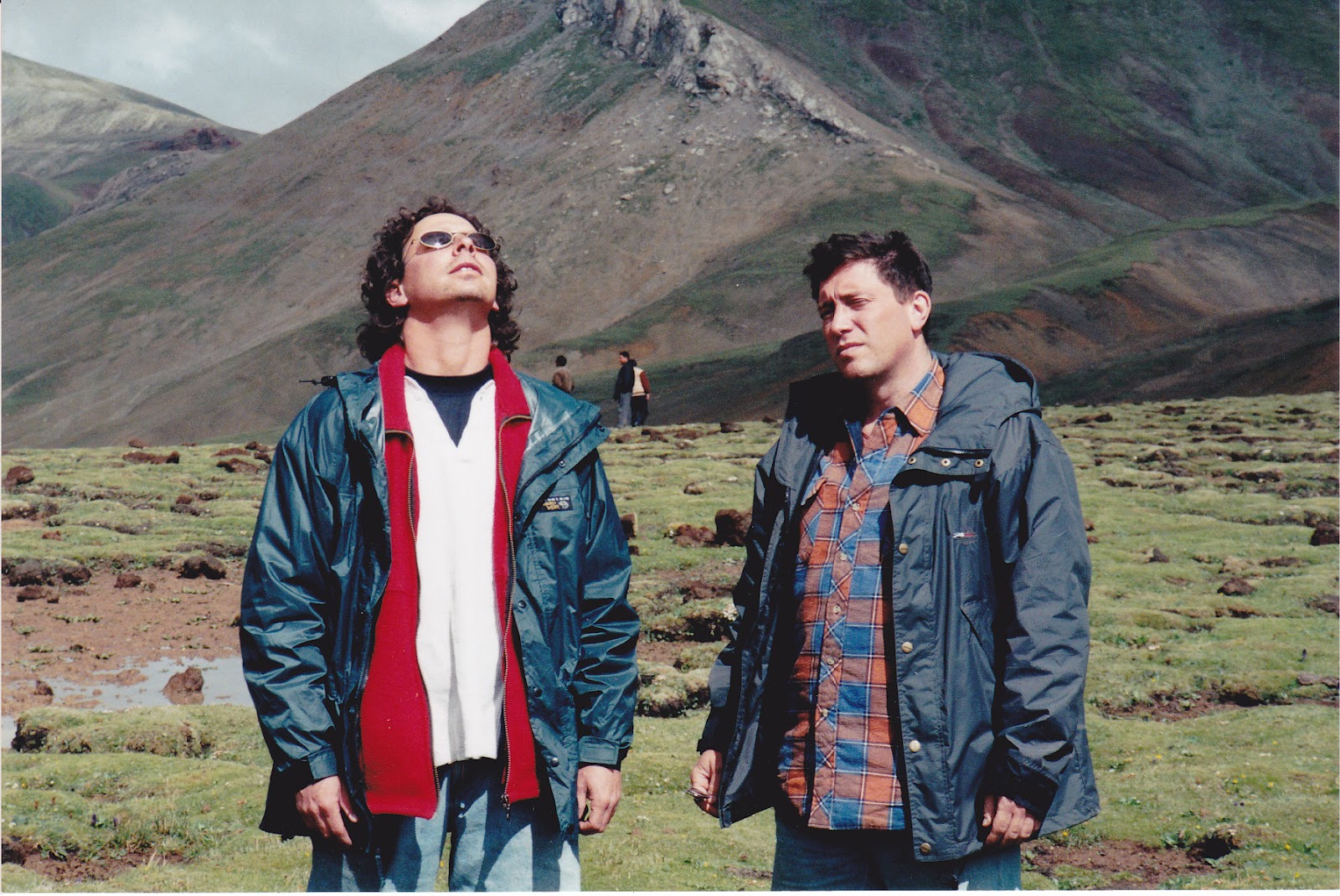
Portrait of a young man, as a charity worker, in Tibet
It is one AM in Chengdu, China.  Dr. Baum and I are trying to get some sleep after an eleven hour drive that started in the Eastern Tibet  and ended in this crappy state run hotel.  This place  looks like a cross between a 1960's Chinese detention center and the worst urban Holiday Inn ever.


Though I couldn't admit it,
I had your back, D.L.
The trip to Government Hotel Number 6 started 2 days ago in our government-appointed Landcruiser which came complete with a government-appointed low level spy to report on any potential anti-Communist or fascist Western behavior. Our spy was about twenty-five years old, smoked a lot of cigarettes and wore a blue baseball cap.  We were flattered that we were important enough to have our own spy.  Our Chinese Governmental hosts told us that he was a young doctor and a Ministry of Health official in training.  When he didn't know which was the business end of a stethoscope we quickly hashed out his actual function on this trip.    There would be zero tolerance of any Pro-Free-Tibet or anti-Chinese thought, expression or discussion by foreigners who are guests of the Chinese government in Tibet.   As we were those guests, our  employer (the fantastic sight-saving  charity SEVA Foundation) asked us not to openly discuss anything pro-Tibet or anti-Chinese.  We were also not to  mention the Dali Lama's name.  The Dali Lama was still considered an enemy of the state by the Chinese government.  We were strongly encouraged not to carry any photo or book with past or present images of the Dali Lama. At every security stop a uniformed Chinese soldier would leaf through our books, one by one, looking for any subversive photos of His Holiness, Tenzin Gyatso.  Sympathetic Caucasian charity workers were high likely targets for this particular crime.  If photos were discovered there would be a quick halt to any of our humanitarian duties and an unscheduled stop in a Chinese cultural prison (for us and anyone else who saw the photo).  For this, and any other work in Tibet, we would have to bury our opinions and go along to get along. Dr. Baum and I had no problem with this.  Out in the middle of the vast, empty Tibetan plateau, sixteen thousand feet up a mountain, who cared what we thought?


Finally, some good road.
The Landcruiser took us through the vicious kinks and curves of Government highway G318.  This road cut through the massive, dense green foothills  of Markam in the Chamdo prefecture of Eastern Tibet.  We drove along the sides of mountains and dizzyingly steep thousand foot cliffs on roads with no signs or guard railings.  The only thing we could see in the caverns below was a low  ceiling of clouds and tree tops.  If we slid down there no one would ever find us.  I hoped we could trust our driver, but he drove like a maniac-- like a man who was either horribly late for a date or dangerously close to shitting himself.   At one point we stopped for a roadside bathroom break in the middle of a field of snow well above fifteen thousand feet.  As our hosts stood in a line pissing onto the side of the road, Dr. Baum and I took up an impromptu  sneak attack and pelted them mercilessly with snow balls.  Our Capitalist, Imperialist, Little League-trained throwing arms were deadly accurate compared to those of our Communist associates.  A few of them ended up peeing on the their own trouser legs or on those of a colleague.  They were ill-prepared for a fascist American snowball attack.  Dr. Baum and I quietly whispered:  "USA, USA!"  We giggled like idiots for the next hour.


Back at Government Hotel Number 6 something was afoot.  Thirty minutes previously we had dragged our luggage up five flights of concrete steps to our floor.  The bags were full of five weeks of clothes covered in Tibetan dirt, sweat and the smell of  burnt yak shit used to heat the homes in which we slept.  The smell was so bad that it seeped from the closed suitcases.  An old, nondescript Chinese woman sat at a desk at the top of the hotel staircase.  She handed each of us a neatly folded, old white towel, a tiny bar of soap and a plastic toothbrush with a small tube of Chinese toothpaste.  She flicked a timed light switch that lasted long enough for her to walk us down the hallway to our room.  She opened the room and walked away.  She would not be giving us the room key.  We were politely told by our hosts to have a good sleep and, in the nicest way possible, that there would be no reason for us to leave the hotel.  We got the message.  It didn't matter.  We were well past exhaustion and would be catching a flight to Bangkok in two more days.  I could do two days in a Chinese hotel standing on my head if I had to.


Our room had two small single beds side by side and a wooden night table inbetween with four non-functioning light switches.  The beds were hard as nails and a little small for medium-sized Western Imperialists, but they'd do for a couple of nights.  Dr. Baum saw me take off my shoes and socks.  I was about to walk to the bathroom when he yelled,


"WAIIIIIIIIIT!  DON'T MOVE!"


The only thing standing between
me and snot between my toes.
I froze.  I figured he must have seen a rat.  He pointed to the end of my bed to a plastic bag with a fresh pair of cheap paper slippers.   He'd worked in China before.  Apparently Chinese people have a habit of excessive spitting, coughing and snot hawking. According to Dr. Baum, it occurs both outdoors and indoors.  He said that if my bare feet never touched the carpet of a Chinese Government Hotel I'd be a happier, biologically safer man.  I managed a successful Cirque du Soleil-type leap and hovered from the chair to the bed.  I slipped on the thin pair of slippers and my feet have never since touched the floor of a Chinese Government Hotel.  We talked for a while and listened to some Tom Waits music because it seemed the perfect background music for this kind of hotel incarceration.  I shut off the lights and went to sleep.  As I drifted off to sleep there was a knock at our door.


"Who the hell is that?" I said.
"No idea.  They'll go away."
Knock, knock, knock.
"Who's there?  We're sleeping.  Come back in the morning."
Knock, knock, knock, knock.
"Jesus Christ! Just a second!"


I sat up and fished around with my toes to find the paper slippers.  My big toe hit the moldy carpet and I grimaced.  I shuffled carefully to the door to keep the oversize slippers on my feet.  When I opened the door and a woman--a  different woman than our hotel monitor/warden--was standing there with towels in her hand.  She said:


"You.....you?"
"Already have.  ALREADY HAVE!  Look."  I pointed to the towels on the bed.
"You....you?"
"NO THANK YOU.  I mean shay-shay nee. No.  Bye bye."


I closed the door before she got out the next "you," spun on my paper slippers and shuffled back to bed.  Fifteen minutes passed.


Knock, knock, knock.
"Dammit! What???  We're trying to frigging sleep!"
Knock, knock, knock.
"Fuck!" (It always feels safer swearing in English in a foreign country).  Dr. Baum just ignored it.
"Don't answer it," he said, "they'll go away."
KNOCK, KNOCK, KNOCK.
"WHAT???  Idiots!"


I repeated protocol.  Toe to floor.  Slippers to feet.  Shuffle to the door.  I opened the door and yet a  different woman was standing there holding the towels.  I got irritated.


"Look,"  I said, as if my insistence gave me universal translatable ability, "we already have frigging towels.  We.......don't........need.......any........more.........towels!  No need nada."


Dr. Baum rolled over.  He looked at the door, then looked at the girl, then looked at the towels, then looked at me.  He said:


Fresh towel sir?
"Erik, the towels are the same, the girl is different.  She's not selling towels."
"Oh.....Ohhhhhhhh!"
I  felt pretty dim.  
"Look, we don't need that either.  Please go away.  We don't want.  WE..........DON'T.......WANT."  I slammed the door definitively.
"You.......you?"
"I told you not to answer it," said  Dr. Baum.


We made it through the night.  I'm fairly sure there were more fresh towel visits to our door, but I was so exhausted I slept through them.  We had one more day and one more night in Chengdu. The day was ours to do what we would, but the night was reserved for an Official Dinner with official officials from the Ministry of Health.  Anything important done in China is done around a meal.


We wandered around the dirty, urban sprawl of the Chengdu business district in the afternoon. Someone once wrote this about Chengdu:


With over 2,000 years of history, this capital city of Sichuan province is one of the most beautiful cities in China.  The national government has even determined that Chengdu is the cleanest city in China.  Chengdu is sometimes called the City of Brocade; the Jinjiang, which means brocade, is a river that flows through the city.


Even looking past the bad grammar, this is bullshit.  If by being "the cleanest city in China" they mean that the copious spit and snot on the street is the least biologically noxious, then I agree.  Chengdu was so depressing that it should have its own shade of gray named after it.  Even in the middle of the day it felt like the sun had just said "fuck it" and never came out.  The clouds had an unnatural brown tinge to them that gave the city the same glow you'd get from  bad yellow fluorescent lighting.  Dr. Baum and I just walked around and killed time.  In twenty-four hours we would be in Thailand for some R&R.  The sun would shine and I'd walk freely barefoot in a hotel room again.


Officially, an official meeting
with official Chinese officials.
Our government hosts and spy fetched us at the hotel at nightfall.  We were brought to a Chinese restaurant as big as a football field and ushered into a private room in the back.  The table was large, round and had a massive Lazy Susan rotating in the center.  Besides chopsticks and a small pack of napkins there were two shot glasses, a tea cup and an ashtray at each seating.  Dr. Baum and I took our seats and Ministry of Health officials sat themselves according to rank.  Once seated we did quick recon on the best places available to hide the food we'd need to pretend we'd eaten. This was not my first sitting at a large  Lazy Susan.  As the Western guests, our appreciation of the food in this chosen restaurant would make or break the evening for whichever official had chosen the venue.  This was a lot of pressure.  To refuse a dish would be insulting at least until mid-meal when you could pretend you were already full.  As luck would have it, we could expect all the scary, inedible foods to come out first.  We were in luck.  I tapped Dr. Baum on the shoulder and motioned under the table with my eyes.  There, attached to the table, was a long narrow shelf for cigarettes and belongings that ran the entire length of the table. If we stacked plates cautiously, it could hold the entire meal.  Even better, it was partially obscured by the table cloth. We smiled at our hosts and asked our translator to relay  the following message:  Bring it on.  We're starving.


Eat me.
No great surprises at this meal:   Blood Red Sausage with clots, chicken knuckles, some sort of animal heart, filthy brown million year old eggs and the tongue of some animal that had the  most disturbing texture I've ever bitten into.  Last, but never least, there was my worst nightmare: Tripe in viciously hot Szechuan sauce. Rice was given at the end of the meal which for me  served a dual purpose.  Firstly, scattering rice on my plate and putting different sauces on it gave the illusion of good night of eating.  Secondly, it laid a strong and absorptive base in the stomach for drinking challenges that would soon follow.  This  drinking challenge ritual was as much a part of an official government meal as chopsticks and Tripe.  


A large  bottle of Baijiu was placed in the middle of the table and small glass shot glasses filled carefully to the brim.  The first of many toasts to come came from the local head of the Ministry of Health.  Our translator went to work.  Thank you to our honored guests, blah blah blah, thank you from the Chinese people, blah blah blah, we hope to see you again, safe journey, blah blah blah blah.  All eyes were on us and glasses were raised with expectation.  It was at this point where Dr. Baum informed our hosts that he does not drink alcohol.  The table grew quiet.  Dr. Baum said it was a religious choice and as this was translated all heads nodded together in acceptance.  "Nice move," I said.  I felt abandoned and figured it was a good opening for me to follow in suit, but I felt a stronger need to uphold the Western Imperialist image of strength and resolve in the face of a Communist challenge.  All eyes shifted to me, the lone round-eye in the room still holding a shot glass.  I looked to my translator and said,


"Let's do this."


Bring it on, my Communist friend.
Baijiu is not an especially strong alcohol, but it tastes like petroleum pickled in Tamarind.  It's revolting and even the smell of it these days turns my stomach.  But not on that day.  Eventually the toasting was chaotically broken down into groups of two to four people and negotiations were taking place.  I will drink two shots if you drink only one.  I will drink four shots to your three.  The official next to me pulled me aside for a personal toast.  He filled our glasses, we clinked them together and then he grimaced and slowly, painfully poured the Baijiu down his throat.  As he was half-way finished, I looked him straight in the eye and tossed back my shot straight faced in a quick second, Crint Eastwood style.  The table went silent.  Then the official said something to me and everyone started laughing hysterically.  He motioned to my translator to fill me in.


"He say, a man who drink like that, he must have many many girlfriends.  Too many girlfriends! Ha ha ha ha ha ha ha!"


He's gonna blow!
There comes a moment of exquisite acceptance when you finally realize that you are in the club.  This was my moment in China.  Suddenly I was the flavor of the night and everyone had to have a  Baijiu challenge with the Western Imperialist.  But I had an ace in the hole and I knew it:  an American liver.  It is scientifically proven that the American liver will outlast a Chinese liver in an alcohol challenge nine out of ten times.  Potentially I only had one guy to worry about.  I'd take those odds.  Fortunately for me, living in California provided me with enough Mexican Tequila excursions to know in my heart that I'd outlast this Chinese crew and uphold the Western end.  It was about forty-five minutes later when the first red cheeked government official hit the floor and we decided to call it a night.  Cultural boundaries were bridged, poor Tibetan people were treated and it was a successful ending to a successful trip.  Dr. Baum and I had less than twelve hours before our flight to Thailand and we were giddy at the thought of touchdown in Thailand, the Land of Smiles.  All that stood in our way was one more night in Government Hotel Number 6 and a slew of  annoying, yet hopeful, towel ladies.

"Anyone want to talk politics?  Anyone?"


Thursday, February 23, 2012

The Violation


Working many years in Africa is like eating the hottest pepper on the planet.  Throughout the horrific pain and the watery eyes there is something insidiously enjoyable and appealing about it.  And one year after you've sworn it off forever, you find yourself craving it again for no tangible reason.


I  worked in and out of Africa for about ten years in seven of the fifty-four sovereign  African nations.  Anyone who's worked in some of the more difficult regions of Africa, especially in the charity world, will tell you that work in Africa is not like being out on a rope.  Its more like what happens after you let go.  So much of your valuable time is spent putting out the fires on top of the fires until you lose sight of the initial blaze.  Still, it is an exercise in persistence and persistence will get you forward more times than it will get you dead.  If nothing else, character will be built and there will be permanent bragging rights.


I'm betting this Charity Worker stays at
The Hilton
There's a little trick I've learned on determining the level of executive position in any moderately sized charity or NGO (Non-Governmental Organization).  I'll pass this along  for free to those hoping to enter the rewarding field of charity work and public service.  The rest of you won't give a shit. It's a short equation I've developed that has fairly close to ninety-five percent predictive value.  When you meet someone who has worked in Africa ask them two questions:  What was the name of your hotel and how long did you stay there?  Anyone who can remember the name of the hotel and limited their stay to under three days is well up there on the ladder.  CEO, CFO, CMO,Sean Penn and Angelina (God bless them both).  Hit them up for a job. They hate being in the field, but they'd love for you to be.  Anyone who can't remember the name of the hotel, but stayed there for one week or less is in a mid-level management position.  He or she will not be able to guarantee you a job. He or she will, however, know whether there are a few more pennies in the budget to hire you for well less than you figure you are worth (in the name of charity, of course).   Anyone who laughs when you say 'hotel' and answers the length of stay question by counting the number of raining seasons is the guy or girl on the ground.  I, and many of my friends, are these people.  We will gladly refer you on for job as long as its not ours you will be taking.


I'm here to work.  Please direct me to
your shittiest Guesthouse.
We in "the field" live a life of filthy dark guest houses that smell like mold and old socks.  We sleep beneath ratty old mosquito nets spending long  sweaty nights under a single ceiling fan  that rotates painfully, ineffectively slowly.  We  wear it like a badge of courage.  Before leaving America I never anticipated living or thriving in such spartan conditions.  I was happy living the privileged life of a single doctor running amok in Los Angeles, California.  Roughing it was a night or two in a crappy Motel 6 outside of Fresno on the way to Northern California.   I pissed and moaned. Times changed.  I changed.


In 2005 I took a job in Central Tanzania with the daunting task of developing, from the ground up, a treatment center for HIV and AIDS .  I lived in a town called Illula.  Illula  is a sprawling dusty, drought-ridden village seven hours from the crystal azure waters of Tanzania's coastline in Dar es Salaam.  Illula is barely on the map.  You can't even Google it.  Up until then I'd taken a number of charity jobs in a lot of desperate African villages, but I'd only ever stayed a few weeks at a time. A little discomfort is easy to handle when  the end of it in sight. This job in Tanzania was to be my Swan Song. After it was over I could get the "survival chip" off my shoulder and finally get a real taste of "Dr. Livingston, I presume."  I planned to settle down and start a normal family life and get back to a  normal doctoring job in a semi-normal place (I was considering a move back to Los Angeles).  Today,  seven years later, as I write this from the middle of an Indonesian jungle and watch a large monitor lizard cross the hospital lawn, I can only shake my head and smile.


Main Street, Illula.  Rush hour.
The hospital in which I worked was a government facility. It was a series of crumbling buildings on a half-acre piece of land set off from the main road of the village. In the center of the land was an open yard of dirt and dust.  There were a few trees, a lot of chickens and an occasional wandering goat. The chickens crowed loudly each day at four AM, so I awoke each day at four AM too. An American Lutheran church had kindly adopted and supported our Illula hospital. Every year the Lutherans sent pieces of shiny new stainless steel equipment that shined brightly among the dust and old green paint of the hospital ward.  After a years of use, dust and harsh conditions, the lack of maintenance turned  the machines dull and rusty. They would fade into the background with the other equipment too old or too broken be patched or fixed.  


My house was a small brick building with a cement floor, an outdoor kitchen and a bedroom. My bathroom that had a toilet and a tub, but no running water).  There was a rusty blue refrigerator just inside the door to the kitchen. It had broken years ago and was being used as a cabinet.  My driver/assistant/food slaughterer, Abdallah,  turned a closet just off the living area into his bedroom.  We had electricity for most of the day and screens on none of the windows.  Each afternoon at sunset I would close the doors and windows and do a sweep of the room with an electrified tennis-raquet-type bug killing device I'd bought from a Bangkok street vendor for nearly three dollars.  The Malaria infected mosquitoes prefer to come out at sundown.  Everyone in Africa knows this.  It seems to be the  best time for seeking fresh blood.  These mosquitoes reminded me of the aging broken down expatriates trolling the girly bars in Bangkok during Happy Hour.  The  tennis raquet made a sharp electric SNAP and frying sound every time every time it made contact.  There would be two  to three hundred zaps every afternoon.  The nurses and administration workers from the hospital would come in to watch this event every now and again.  I was the only white man around for miles.  Watching me electrocute hundreds of mosquitoes was  the most interesting occurrence in the village at six PM every day.  After I was done with pest-clearing duties, Abdallah would routinely open the back door to the kitchen while slaughtering the meal for the evening (usually an anorexic chicken or a goat).  This invariably let just as many mosquitoes back in the house.  This was our routine.


This woman has not tucked in her mosquito net.  Poor technique.
My bed was probably constructed about the same time the roof was put on the house since the wood was exactly the same. An old mosquito net without too many tears hung from the ceiling just long enough to tuck under the mattress. The mattress was a fairly fresh slab of foam rubber set in a frame two feet off the ground.  You don't want to be on  the floor in Tanzania because of spiders.  If the spiders wanted me they would have to put some work in to get a fresh piece of me.  Getting in and out of bed was a laborious set of steps similar to getting in and out of an airlock in a movie about a deadly viral biohazard.  First, the mosquito net had to be unfurled.  Any creatures clinging sneakily to the inside of the net had to be sacrificed.  Next, removal of the sandals and the brushing off of the filthy feet.  Once the legs were safely inside came the meticulous tucking in of the mosquito net to prevent  sneaky insect attacks from below.  The foam mattress was too small for the bedframe so I would jam  three tee-shirts in the extra space to complete the seal.  Finally, a restful and protected night's sleep in the quiet African night.  On the nights where I'd drunk a few beers I would painfully hold my bladder for hours rather than repeat this process over and over again.


If you work in Africa there will be biologic hazards to  deal  with. It's not for everyone, but if you embrace it in a Bear-Grylls-way it can be exciting too.  In Abdallah's bedroom of a closet (or closet of a bedroom) the corner of the wall had rotted through.  If you stood at the right angle you could look straight into the African sky.  We would soon find out that the things in the African sky were also looking at us.  I asked Abdallah if he wanted to try to fix the hole, but he said no.  He said that it made the nights a little cooler.  He also said he didn't worry much about the mosquitoes coming in.  He was from Uganda and had had Malaria so many times that Malaria had grown tired of him. One night, just after dinner, as we sat in the livingroom we heard a loud THUD and a mad flapping sound just outside his room.  There on the ground was a dirty heap with grey fur and beady white eyes.  A bat as large as a small child had caromed into Abdallah's closet on an unintended flight path and rolled unhappily into the house.  He was confused and he was angry.  Abdallah said:


"Daktari, it is a bat."


Got Rabies?
I slapped myself in the head, metaphorically.  Rabies, I thought, goddamn Rabies.  All the vaccines, bug sprays, Malaria prophylaxis pills and protective routines I'd considered and I'd skipped the Rabid bat prevention scheme.  It was a rookie mistake, but there was no time to think about that.  We had to do something about the massive bat in the middle of the livingroom.  In a few seconds he was going to figure out that he could fly in here and he was too big to hit with my electric mosquito racquet.  I ran to the bathroom, grabbed a towel and heaved it top of the bat.  The bat instinctively bit down on the towel and chomped away.  Abdallah grabbed the end of the towel and dragged the big rodent through the livingroom like a big ugly dog on a leash.  He heaved the towel and bat into the front yard and eventually the bat flew away.  We had our bat attack protocol.  We would have the chance to use it three more times before I left Tanzania.  Abdallah would not give up his cooler nights in the closet bedroom.


At the end of six months it was time to go home.  I had a pregnant wife waiting for me in Bangkok and the project was completed in record time.  It is amazing how fast you can work when your unborn child and real Thai food wait at the tail end of a job.  Going home was not a direct route, but I did it as quickly as possible.  It was a seven hour drive to Dar es Salaam and a flight the next morning to Addis Abbaba, Ethiopia. I'd stay in Addis overnight and visit some friends.  After that, it was a straight shot to Bangkok on the Ethiopia Air  which, judging from the characters on the plane, seemed to be the most direct smuggling route to Asia.  By the time I got to Dar, I'd started scratching.


I had two bug bites on my back that were annoying the piss out of me.  I slathered on liberal heaps of cortisone cream every few hours and figured they'd go away.  It worked for a while, but the itch kept coming back.  On the final flight home I took cold drink cans from the flight attendants and sat against them to make the itch subside. This seemed to interest my fellow smuggler passengers as they thought I was working on a soda smuggling scheme.  I didn't care.  I was going home and that was all that mattered. If all I'd left Africa with was a couple of annoying bug bites I felt pretty lucky.  I got into Bangkok at midnight and was home, in my own bed, for the first time in six months, by two AM.  


I awoke the next day with the feeling of elated, giddy familiarity that comes with a good night's sleep at your own home.  In celebration I figured I'd take me, my wife and her baby bump out for a proper Bangkok breakfast.  I took a long and proper shower.  It was one of the first showers for me in a long time that did not come from a cracked plastic cup dipped into a bucket of cold water.  Sometimes it's the little things that mean so much.  I walked into the bedroom and started scratching again.  I tried to get a look at the bites in the mirror, but couldn't get the right angle.  I called my wife over to take a look.  She scratched at my back a couple of times and then said something that will stay with me until I turn senile:


"Worm!  Worm! Worm!"
"What the......."
"Worm!  I said worm!  There's a worm in your back."
I felt sick.
"Well get it out, dammit!"


She looked at me with disgust, like it was not part of her job description.   She ran to the bedside table to get her tweezers (every Thai woman has at least five sets of tweezers).  She started grabbing at my skin with the tweezer, pulled something out and then presented the prize to me. She held it in front of my nose.  Her face was one big grimace of disgust.


"Worm.  Ewwwwwwww.  It's moving!"


I had to sit down.  There on the business end of the tweezer was one small perfectly formed, wriggling, half centimeter bug larvae.  I wanted to vomit.  What is the most horrible thing someone could say to you after an experience like this?


"There's one more, you know?"


She went to work on the second one and after a few seconds of scraping she pulled a second larvae from my back.  I could swear I heard a little suction popping sound when it came loose, but that was probably just in my head.  


"Fucking Hell.  Are there any more?"  I asked.
"No.  Not for now."
"Ugh.  I feel so violated."  Like a good wife, she started laughing at me.


"Son, one day all this skin will be yours."
After the room stopped spinning I started to self-diagnose.  I knew what this was.  Myiasis.  Goddamn Myiasis.  Do yourself a favor and don't Google it--there are pictures you don't want floating around in your head.  I'll fill you in:  Myiasis is an infestation of the skin by developing larvae of a  number of different species of fly. It's also goes by kinder and gentler names like Flystrike and Botfly, but no matter what you call it, it is nasty, disgusting and something you'd wish on only the most exquisite of enemies. This is how it happens:  flies get into your clothes and lay their eggs.  You put on the clothes and the eggs slowly work their way under your skin.  The eggs grow inside your skin, hatch later and ultimately a perfect little fly leaves your body to seek his place in the world.  I felt hijacked.  I was some big, unwilling human incubator.  Just like John Hurt in the Alien movie, but without the blood and screaming.  I felt violated.
 
"Are you absolutely sure you don't see any more?"
"I think so."
"You think so YES, or you think so NO?
"No.  No more.  Unless they are inside you."
"Ugh."


On the positive side, the itching immediately stopped.  I was left with two small holes in my back, but they would heal properly in time.  I made a couple of calls to a learned colleague.  He reassured me that once the bugs are out, they are gone.  As it turns out Myiasis can be prevented by ironing your clothes.  The heat destroys the eggs.  Back in Illula the woman who looked after our house would wash my clothes in a bucket and lay them out on the bushes in my front yard to dry. I never gave it a second thought.  I don't imagine there was an iron around for at least fifty miles.   


Africa under more biologically sound times.
During the following year I reached an epic level of bug paranoia.  Every time my skin itched from a mosquito, an ant or even just dry skin, I'd go manic.  I'd call my wife over to do a search and extraction.  She'd come over and wiggle her index finger like a big worm in front of my face just to wind me up.  I'm glad someone was enjoying it.  With time and the addition of newer exciting biological dangers in different countries, this particular paranoia went away.


I miss working in Africa, but I'm not rushing back to work the Dark Continent.  One day I'm sure I will again though.  When the routines were in place and environmental barriers were constructed it was  a simple and enjoyable time of work and  a test of tolerance at the same time.  For those of you who plan on taking on an environment more harsh than you are used to, let this be a lesson for you.  Bring what you need, ask a lot of questions and remain slightly, constructively paranoid.  Definitely bring an iron.  I came to Africa alone, but I left in a group:  me, my worms and my bragging rights.


Take me to your leader.