Showing posts with label Tibet. Show all posts

Saturday, March 24, 2012

The Search For The Karmapa and The Mystical Tibetan Snow Frog

"This way, this way," said the monk who had led us up three flights of the steepest, narrowest staircase I'd ever negotiated.  Our guide monk was a short man with closely cropped grey hair.  He walked with his back hunched forward like a man carrying the weight of life on his shoulders.  He was probably only about fifty years old, but had a weathered, leathery brown face with two small slits of eyes--the results of a lifetime of hard Tibetan elements.  I was giddy and excited here at the tail end of our quest. I wanted to ask the monk questions about this place, but I was sucking wind badly and the only English words the monk knew were "this way, this way."  The monk walked slowly, but deliberately up the narrow wooden steps.  Two people could not pass on this stairway without turning sideways and squeezing by.  He kept one hand on his maroon colored monk's robes and bunched them up to avoid tripping over them.  As slowly as he walked, I was still far behind and needed to stop every ten steps to catch my breath and avoid fainting. We were at nearly fifteen thousand feet in Gurum Town, nearly three hours rocky drive from Lhasa, the capital city of Tibet.  With each step the altitude made my head pound and my legs burn and shake.  I was hurting, but I pushed on.  This quest was in the homestretch.


Will you be having your yak shit
fried or aldente?
I'd spent four weeks in remote Eastern Tibet  spending only one or two nights in each town where we worked.  We were running a large mobile eye hospital and churning out hundreds of surgeries from sun up to sundown.  When the surgeries were over we moved on.  Most nights were spent in ugly, box-shaped, piss yellow  Chinese government hotels.  The hotel rooms were the size of  jail cells and smelled like a combination of public restroom and old cheese.  Most of the villages were too small to have hotels. In these places I slept on floor mats with twenty other people a large community rooms.  The rooms were  heated by yak dung stoves that burned dried yak shit throughout the night.  The smell of pressed, burnt yak shit combined with the smells of twenty guys with high-altitude flatulence did not contribute to a restful sleep. Towards the end of the trip I couldn't handle the smells anymore and opted to put up a small tent in any nearby open field.  Despite the cold it was nice to sleep  under the cool, sweet Tibetan air.  Around midnight wild dogs and yaks would show up, growl and  run in nervous circles around the tent.  I had to do a quick survey of animal threats every time I left the tent to relieve my bladder.  This was still better than sleepless nights immersed in burnt yak shit and fart.


Buddha in the sky with diamonds
For four long weeks I lived like this surviving on packaged noodles, cans of Chinese beans,  hard Yak cheese and fresh Yak milk yogurt.  The yogurt was tasty, but  pulling  five inch Yak hairs out of the bowl before eating the yogurt ruined the culinary experience.  I ate, I survived, I lost twenty pounds.  I saw and experienced things that only a handful of people get to see in a lifetime.  I met children who, upon seeing the first white man in their lives, went screaming in horror yelling about ghosts.  I saw clouds that magically formed images of  Buddhas and magnificent deities in the sky. They would show up in the sky every day appearing and disappearing in two blinks of the eye. It took me less than a week to know that Tibet was not a normal place where normal things happened.  The Tibet I saw earned it's mystical reputation.  We heard about some things there that were so supernatural and so particular to Tibet, that the reluctance to talk about them to outsiders was inherent in Tibetan DNA and culture. The greatest example of this is the legend of the Tibetan White Snow Frog.


"White Snow Frog?  Nope,
never heard of it (wink, wink)."
Dr. Ken had somehow gotten the information about the Tibetan White Snow Frog from our translator.  Our translator was half Chinese, so we assumed it was either the Chinese part of him that was giving up Tibetan secrets or he was drunk and chatty on Tibetan Chaang.  After hearing about the White Snow Frog it became a mini-quest of ours to find one in the five weeks we would spend in Tibet.  Once our group of Tibetan hosts became aware of this quest we ran into nothing but hurdles, obstacles and misdirection in our search.  The more we found out about the Tibetan White Snow Frog, especially the female of the species, the more we understood why.  According to Tibetan legend  the fleshy back of the female White Snow Frog is the single most powerful "virilification" medicine known to man.  A single millimeter sized piece of White Snow Frog flesh has the ability, in both men and women, to make Viagra seem like a baby aspirin.  This is well documented in thousand year old Tibetan medicine texts.  Even more versatile than Viagra, it can be eaten or applied directly to the genitals.  The sickness from this frog flesh, if used without first  removing the toxins, is also well documented.  For us this made local intel on Tibetan White Snow Frog preparation just as important as finding this mythical amphibian--especially if it was going to be applied to the genitals. Our Western thinking had led us towards a very non-Buddha-like thought process.  Imagine the possibilities.  Why wouldn't you share this secret with the world?  To understand this you have to think like a Tibetan.  Every direction, every action and every intent of Tibetan thought is designed to keep a person on the long winding path towards Buddha-hood.  How does the Tibetan White Snow Frog fit into this path?  Follow this closely:  Tibetan White Snow Frog flesh is so powerful that under it's influence  two people will experience the most supernaturally blissful union and most pleasurable sexual experience possible to a human being.  In fact, the euphoria will be so powerful and so pure that the ultimate empty nature of sexual desire will be finally realized.  The striking clarity of this emptiness will cause a person to drop desirous activity like a bad habit.  Once desire is finally removed, it will no longer be an obstacle towards reaching the altruistic state of Buddha-hood.  Knowing a little bit about Buddhist theology, I'm sure its a little more complicated than this, but it remains a potentially life changing message.  The depopulation effect of too many people rising to Buddha-hood could be staggering.  Still, Dr. Ken and I were willing to verify the myth. We also recognized that in Buddhist theology, you must ask an important question three times in order to get an answer.  If you stop after first request, the question could be interpreted as a passing fancy and unworthy of attention.  If you only ask a question twice it shows lack of commitment.  The third time asking is the charm proving persistence and dedication to your curiosity.  We were completely shut down after asking at least thirty locals about the frogs.  We got the "not a clue" headshake each and every time our translator checked with a villager about the local Snow Frog stash.  This quest had officially failed. This was disappointing, but we weren't disheartened.  As practicing Buddhists we knew that if we didn't find a White Snow Frog now, there was still a good chance we'd find it in the next lifetime.


The endless lengths one will go to 
find a Tibetan White Snow Frog   
Each day in remote Tibet felt like the most memorable day in my middle-aged life.  Each day was more surreal and mystical than the next. But as great as the days were I had a sense that there would be a Tibetan experience of Indiana Jones-like proportion coming my way.  And it would happen before we left the land in the clouds. 


I had come to work in Tibet as much for the Buddhist experience as I had for the charity work (which a good Buddhist might argue is one and the same).  I was a practicing Buddhist for quite a while by the time I made it to Tibet.  When people  ask me how long I've been Buddhist I only answer: since creation.  When they roll their eyes I clarify that officially and technically it was in the 1990's.  I (along with seven hundred other Los Angelenos) participated in a formal Buddhist induction ceremony at UCLA's Pauly Pavillion given by Tenzin Gyatso, His Holiness, The Dalai Lama.  There was blessed milk and blessed strings and Talismans given at the massive ceremony, but it was only a technical confirmation of what I'd already believed.  Belief is a very personal and powerful thing, but when it comes to religion, you choose your poison. I had chosen this one.


In Buddhism, much like in major league baseball, being in the presence of the great ones is a glorious and memorable experience.  You feel a transformation afterwards that can last anywhere from a week to a lifetime (depending upon the immenseness of the hero you  meet).  In Tibet, seeking out the great Buddhist masters is like standing on the playing field during the All-Star Game.  It is going to the source.  In the 1990's in Tsurphu Monestary, deep in the hills of Gurum Town, three hours drive from Lhasa, lived The Karmapa.  The Karmapa had been living in the snow-capped peaks of Eastern Tibet for nine hundred years.  You read that correctly:  nine hundred years.  He is currently in his seventeenth reincarnation.  The first Karmapa, around the time of 1190, was the first Buddhist master to leave clues to his followers that would lead them toward finding his reincarnation after he died.  This streamlining of the reincarnation process seemed to make sense to the other masters, including the Dalai Lama, who still practice this method today.  When we sought out the Karmapa he was only fourteen years old and in his training to become the spiritual leader for Tibetan Buddhists accross the world.   In the late 1990's Karmapa was the highest Buddhist master still living in Tibet.  In 1959, the Dalai Lama had escaped in the night as a young man and made his way to India to avoid assassination by Chairman Mao.  The Chinese wanted complete control of Tibet and figured that cutting off the head of the snake was the best way to get control of the body.  They were unsuccessful.  The second highest Tibetan master in Tibet is known as the Panchen Lama.  Once reincarnated and recognized by the Dalai Lama in 1989, the six year old Panchen Lama was taken to Beijing by the Chinese government and kept in custody ever since for "his own protection."  He is still there under lock and key.  This left the fourteen year old Karmapa as the spiritual leader of a nation that was being systematically, piece by piece, usurped by China .  He was free to roam about the beautiful monastery of Tsurphu and the surrounding beautiful peaks and forests of Gurum, but kept under military and secret watch.  It was the Chinese government's plan that he would never leave Tibet in this reincarnation's lifetime.  His captivity was the key towards taking ultimate control of the hearts and minds of Tibet--thus, control of the country.  This convoluted political mess must have been a pretty heavy concept for the fourteen year old reincarnated master.


The Karmapa
We figured there was a very slim chance that two wayward Westerners on a whim would get to sit down with The Karmapa without lots of strings being pulled and lots of advance notice.    The Chinese government was incredibly protective about foreigners interacting with The Karmapa.  Nothing good could come out of it as far as they were concerned.  Westerners would fill his mind with silly Western ideas and plots of escape and freedom.  That's what Westerners do.  Dr. Ken and I decided to make the trek to Tsurphu anyway and try to meet The Karmapa.  Four weeks of charity work in Tibet had to have made a decent sized deposit in our collective Karma banks. We had nothing to lose by trying.  We'd been regularly monitored by a low-level spy since we arrived in Tibet and deemed (as far as we knew) acceptable, well-behaved Westerners.  The spying on foreign charity workers is standard operating procedure.  We had done all that our Chinese government hosts has requested.  Nothing to fear from us.  Nobody tried to stop us as we left our translator and spy behind.  We walked to the city center of Lhasa and hired a local taxi to Tsurphu Monastery.


The road was decent for a change.  It wound around the foothills outside of Lhasa ever upward into the clouds.  Every few miles a twenty foot golden drawing of Buddha could be found on a large flat rock on the roadside.  In lieu of  a GPS this seemed to be the way to find Tsurphu.  Once at the great white gates of the monastery our taxi driver stopped and pointed forward.  Tsurphu was in front of us.  It was a giant village cut into a wide mountain plateau with a great red temple in the center.  As we left the car our driver parked and decided to follow behind us to see what we were up to.  Only a handful of Westerners make this trip.  I'm sure he was just curious, but four weeks of being spied upon made me twitchy and a little more paranoid than usual.  Dr. Ken and I decided to split off and walk different directions.  After successfully ditching the driver we met up at the great steps to the Temple.  We stood and stared at the steep pyramid-shaped steps that led inside.  I know I must have smiled the smile of someone whose dream was about to transition into reality.  This must have been the Buddhist equivalent of what it felt like to enter Yankee Stadium when Babe Ruth was still playing.  I knew that whatever happened next would stay with me forever.


You could feel and smell nine hundred years of existence in the walls of the great temple.  This was not just a tourist icon of a temple, but the center of Buddhist development for one of the most sacred cities in the world.  Hundreds maroon robed monks from ages five to eighty went about their day cleaning floors or sitting in class or chanting mantras that echoed from wall to wall.  We stood in the middle and watched all the activity circle around us.  It smelled of cold stone, sweet burning butter lamps and dusty  cloth.  We sat down to meditate and pray with some of the monks in the back.  When we were finished a   monk approached us.  He was old, but his closely cropped hair was still brown.  He spoke surprisingly good English and asked us why we were here.  We told him the story of our visit to Tibet and about our four weeks of travel and work through Eastern Tibet.  We told him that we'd worked in the prefecture of Kham and in the cities of Markam, Chamdo and others.  We talked for a few minutes, but it was the kind of conversation that only passes the time until you ask what is really on your mind.  I think it was Dr. Ken who finally said,


Tsurphu Monastery.  Where the
magic happens.....
"Sooooooo, Is The Karmapa here today?"
"Oh yes," said the monk.  "He lives here, you know.  He is very busy in study."
"Oh,"  said Dr. Ken, "I'm sure he's always busy. I understand, but please give him our regards."
"I will.  Thank you for coming to Tibet to help Tibetan people.  Too-jee-jay (thank you in Tibetan)."


And with that he placed his hands together, bowed his head and walked away.  We felt a little dejected for a moment, but only as dejected as you can feel in a nine hundred year old sacred temple of your dreams.  This may have not been the quest, but it was still a quest.  We'd made it Tsurphu.  It was unlikely we'd ever be back.  Not in this lifetime anyway. We wandered around the temple for another half hour in the shadow of twenty foot, hundred year old carved deities. This was a once in a lifetime chance to experience a living, breathing, ancient museum.   As we left the temple we saw the English speaking monk waiting on the steps.


"Tashi delek, doctors.  I am glad I found you.  Are you leaving to go back to Lhasa?"
"In a little while," I said.
"Can you spend a little more time at Tsurphu.  The Karmapa would like to meet you."
I don't think we could speak through the smiles on our faces.  It happened just like that.


The monk led us to the back of the temple through a long, dark, winding hallway.  I was thinking that we should be memorizing how many left and right turns we were taking, but then again finding our way out after getting lost in Tsurphu could be  fun.  We stopped at an old red door and waited.  An older monk met us here.  He looked at us for a minute trying to sort us out in the dark hallway.  He said,


"This way, this way."


Yak Burger:  Before
We climbed two flights of the narrow stairs.  At the top the old monk met a younger monk carrying two white ceramic tea cups.  He barked a few commands to the younger monk, pointed at us and grunted.  The younger monk nodded and squeezed past us down the stairs.  We went slowly up another flight of steps and into a room with small Chinese style table, yellow painted walls and old hand printed weathered Tibetan "thangkas" hanging on the walls.  The thangkas must have been over three hundred years old.  I motioned at them  with my eyes to Dr. Ken and he nodded his head.  We were both too excited to speak.  Do we even speak at all?  We'd never really considered the protocol when speaking to a nine hundred year old Buddhist master in the form of a fourteen year old Tibetan boy.  I never imagined we'd get this far.   The monk pointed to the floor and we obediently sat down at the small table.  Then he left through a second door in the back of the room


Yak Burger:  After
We sat silently in that room for about twenty minutes.  The room was losing its light as the mid-afternoon sun headed down through the cloudy sky.   The sun sets early in Tibet and driving back to Lhasa at nighttime was going to be twice as dangerous on the mountain roads. It didn't matter.  It was getting dark and we were hungry, but were staying in Tsurphu for as long as it took.  You don't drop a quest because you might miss dinner (though we had already discussed getting a legendary Yak Burger at the Snow Lion Pizza restaurant in central Lhasa. Highly recommended).


The old monk appeared at the door again and stared at us.  We stared back at him.  After about twenty seconds he motioned for us to follow him.  He walked into a short dark hallway and stopped at a door at the end.  As he walked to the door he stopped and pulled the second door open towards us.  There behind the door was a snarling Tibetan Mastiff on a short rope tied to a hook on the wall.   As soon as he saw us he went crazy.  He was vicious and he was angry.  The dog was about three feet tall with matted, dusty brown fur and he was pulling on the rope so hard that his front legs were off the ground.  He was growling and snapping a pair of foaming jaws into the air.  The rope that tethered him to the wall was exactly long enough to let an average sized person slip between the dogs crushing teeth and the doorway, but only if that person turned perfectly sideways.  Beyond the door was a narrow dark stairway.  The monk was a tiny old man.  He slipped by without regard to the dog, like he'd done this hundreds of times. He dissapeared up the steps beyond the dog.  I had a long string of white, bone prayer beads around my wrist.  I pulled them in close not only to pray, but to keep anything from dangling down low for the dog to bite.  I looked at Dr. Ken and said:


"Damn.  He looks angry."
"We better hurry up.  The longer we stand here the angrier he's getting.  I don't like the look of that rope either.  You go first."


"May I please know your intentions with The Karmapa before I chew your leg off?"


I quickly, instinctively decided to pass through with my back to the dog.  That way I could cling to the wall and avoid being castrated.  As I got close to him he went even crazier.  I turned sideways, slowly stuck my leg past the dogs nose and planted it on the first step past the door. I could feel the heat of his breath through my pants.  Then I pushed off hard with the leg still in the room and slid by quickly. I jammed myself up against the staircase as far away as possible.


"I"m in!"


I walked up the steps far enough to make room for Dr. Ken to follow.  He came flying through and slammed against the wall.  We whooped and high-fived.  The old monk was at the top of the next stairs looking both bored and impatient.  He walked through a door and we followed.  And just like that, there at the front of the large room was The Karmapa.  He was wearing a golden jacket over his robes and sitting in front of a simple red table.  Though he was only fourteen years old, the light, the shadows and the moment made him seem eight feet tall.  We walked slowly into the room, bowed and prostrated to The Karmapa and took a seat on the floor in front of him.  


stay tuned for part II.......................................


In the sacred hallows of the Master

Friday, March 2, 2012

Barefoot and Drunk in Tibet

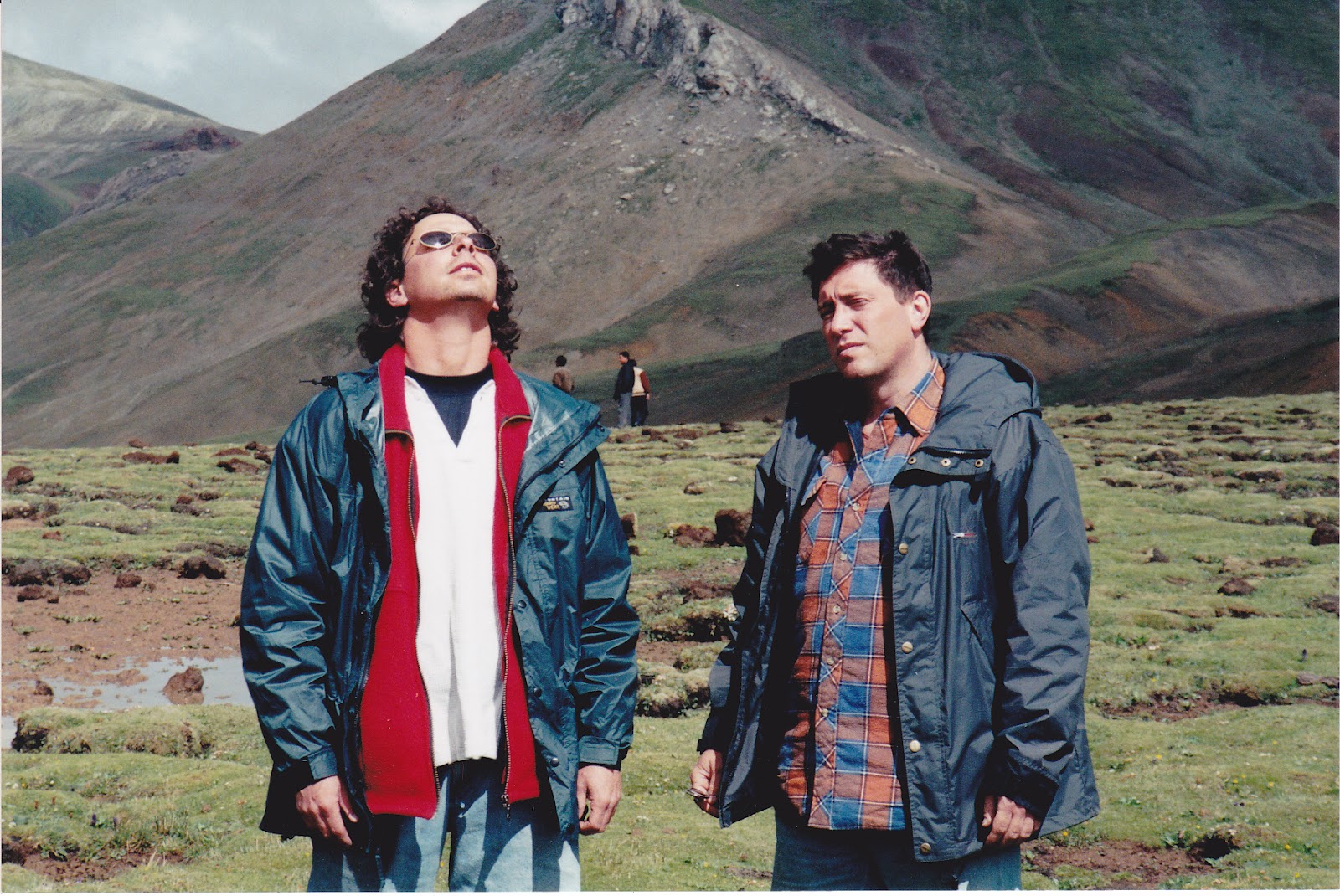
Portrait of a young man, as a charity worker, in Tibet
It is one AM in Chengdu, China.  Dr. Baum and I are trying to get some sleep after an eleven hour drive that started in the Eastern Tibet  and ended in this crappy state run hotel.  This place  looks like a cross between a 1960's Chinese detention center and the worst urban Holiday Inn ever.


Though I couldn't admit it,
I had your back, D.L.
The trip to Government Hotel Number 6 started 2 days ago in our government-appointed Landcruiser which came complete with a government-appointed low level spy to report on any potential anti-Communist or fascist Western behavior. Our spy was about twenty-five years old, smoked a lot of cigarettes and wore a blue baseball cap.  We were flattered that we were important enough to have our own spy.  Our Chinese Governmental hosts told us that he was a young doctor and a Ministry of Health official in training.  When he didn't know which was the business end of a stethoscope we quickly hashed out his actual function on this trip.    There would be zero tolerance of any Pro-Free-Tibet or anti-Chinese thought, expression or discussion by foreigners who are guests of the Chinese government in Tibet.   As we were those guests, our  employer (the fantastic sight-saving  charity SEVA Foundation) asked us not to openly discuss anything pro-Tibet or anti-Chinese.  We were also not to  mention the Dali Lama's name.  The Dali Lama was still considered an enemy of the state by the Chinese government.  We were strongly encouraged not to carry any photo or book with past or present images of the Dali Lama. At every security stop a uniformed Chinese soldier would leaf through our books, one by one, looking for any subversive photos of His Holiness, Tenzin Gyatso.  Sympathetic Caucasian charity workers were high likely targets for this particular crime.  If photos were discovered there would be a quick halt to any of our humanitarian duties and an unscheduled stop in a Chinese cultural prison (for us and anyone else who saw the photo).  For this, and any other work in Tibet, we would have to bury our opinions and go along to get along. Dr. Baum and I had no problem with this.  Out in the middle of the vast, empty Tibetan plateau, sixteen thousand feet up a mountain, who cared what we thought?


Finally, some good road.
The Landcruiser took us through the vicious kinks and curves of Government highway G318.  This road cut through the massive, dense green foothills  of Markam in the Chamdo prefecture of Eastern Tibet.  We drove along the sides of mountains and dizzyingly steep thousand foot cliffs on roads with no signs or guard railings.  The only thing we could see in the caverns below was a low  ceiling of clouds and tree tops.  If we slid down there no one would ever find us.  I hoped we could trust our driver, but he drove like a maniac-- like a man who was either horribly late for a date or dangerously close to shitting himself.   At one point we stopped for a roadside bathroom break in the middle of a field of snow well above fifteen thousand feet.  As our hosts stood in a line pissing onto the side of the road, Dr. Baum and I took up an impromptu  sneak attack and pelted them mercilessly with snow balls.  Our Capitalist, Imperialist, Little League-trained throwing arms were deadly accurate compared to those of our Communist associates.  A few of them ended up peeing on the their own trouser legs or on those of a colleague.  They were ill-prepared for a fascist American snowball attack.  Dr. Baum and I quietly whispered:  "USA, USA!"  We giggled like idiots for the next hour.


Back at Government Hotel Number 6 something was afoot.  Thirty minutes previously we had dragged our luggage up five flights of concrete steps to our floor.  The bags were full of five weeks of clothes covered in Tibetan dirt, sweat and the smell of  burnt yak shit used to heat the homes in which we slept.  The smell was so bad that it seeped from the closed suitcases.  An old, nondescript Chinese woman sat at a desk at the top of the hotel staircase.  She handed each of us a neatly folded, old white towel, a tiny bar of soap and a plastic toothbrush with a small tube of Chinese toothpaste.  She flicked a timed light switch that lasted long enough for her to walk us down the hallway to our room.  She opened the room and walked away.  She would not be giving us the room key.  We were politely told by our hosts to have a good sleep and, in the nicest way possible, that there would be no reason for us to leave the hotel.  We got the message.  It didn't matter.  We were well past exhaustion and would be catching a flight to Bangkok in two more days.  I could do two days in a Chinese hotel standing on my head if I had to.


Our room had two small single beds side by side and a wooden night table inbetween with four non-functioning light switches.  The beds were hard as nails and a little small for medium-sized Western Imperialists, but they'd do for a couple of nights.  Dr. Baum saw me take off my shoes and socks.  I was about to walk to the bathroom when he yelled,


"WAIIIIIIIIIT!  DON'T MOVE!"


The only thing standing between
me and snot between my toes.
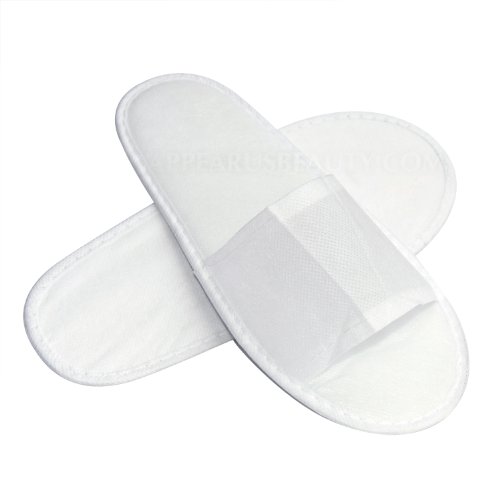
I froze.  I figured he must have seen a rat.  He pointed to the end of my bed to a plastic bag with a fresh pair of cheap paper slippers.   He'd worked in China before.  Apparently Chinese people have a habit of excessive spitting, coughing and snot hawking. According to Dr. Baum, it occurs both outdoors and indoors.  He said that if my bare feet never touched the carpet of a Chinese Government Hotel I'd be a happier, biologically safer man.  I managed a successful Cirque du Soleil-type leap and hovered from the chair to the bed.  I slipped on the thin pair of slippers and my feet have never since touched the floor of a Chinese Government Hotel.  We talked for a while and listened to some Tom Waits music because it seemed the perfect background music for this kind of hotel incarceration.  I shut off the lights and went to sleep.  As I drifted off to sleep there was a knock at our door.


"Who the hell is that?" I said.
"No idea.  They'll go away."
Knock, knock, knock.
"Who's there?  We're sleeping.  Come back in the morning."
Knock, knock, knock, knock.
"Jesus Christ! Just a second!"


I sat up and fished around with my toes to find the paper slippers.  My big toe hit the moldy carpet and I grimaced.  I shuffled carefully to the door to keep the oversize slippers on my feet.  When I opened the door and a woman--a  different woman than our hotel monitor/warden--was standing there with towels in her hand.  She said:


"You.....you?"
"Already have.  ALREADY HAVE!  Look."  I pointed to the towels on the bed.
"You....you?"
"NO THANK YOU.  I mean shay-shay nee. No.  Bye bye."


I closed the door before she got out the next "you," spun on my paper slippers and shuffled back to bed.  Fifteen minutes passed.


Knock, knock, knock.
"Dammit! What???  We're trying to frigging sleep!"
Knock, knock, knock.
"Fuck!" (It always feels safer swearing in English in a foreign country).  Dr. Baum just ignored it.
"Don't answer it," he said, "they'll go away."
KNOCK, KNOCK, KNOCK.
"WHAT???  Idiots!"


I repeated protocol.  Toe to floor.  Slippers to feet.  Shuffle to the door.  I opened the door and yet a  different woman was standing there holding the towels.  I got irritated.


"Look,"  I said, as if my insistence gave me universal translatable ability, "we already have frigging towels.  We.......don't........need.......any........more.........towels!  No need nada."


Dr. Baum rolled over.  He looked at the door, then looked at the girl, then looked at the towels, then looked at me.  He said:


Fresh towel sir?
"Erik, the towels are the same, the girl is different.  She's not selling towels."
"Oh.....Ohhhhhhhh!"
I  felt pretty dim.  
"Look, we don't need that either.  Please go away.  We don't want.  WE..........DON'T.......WANT."  I slammed the door definitively.
"You.......you?"
"I told you not to answer it," said  Dr. Baum.


We made it through the night.  I'm fairly sure there were more fresh towel visits to our door, but I was so exhausted I slept through them.  We had one more day and one more night in Chengdu. The day was ours to do what we would, but the night was reserved for an Official Dinner with official officials from the Ministry of Health.  Anything important done in China is done around a meal.


We wandered around the dirty, urban sprawl of the Chengdu business district in the afternoon. Someone once wrote this about Chengdu:


With over 2,000 years of history, this capital city of Sichuan province is one of the most beautiful cities in China.  The national government has even determined that Chengdu is the cleanest city in China.  Chengdu is sometimes called the City of Brocade; the Jinjiang, which means brocade, is a river that flows through the city.


Even looking past the bad grammar, this is bullshit.  If by being "the cleanest city in China" they mean that the copious spit and snot on the street is the least biologically noxious, then I agree.  Chengdu was so depressing that it should have its own shade of gray named after it.  Even in the middle of the day it felt like the sun had just said "fuck it" and never came out.  The clouds had an unnatural brown tinge to them that gave the city the same glow you'd get from  bad yellow fluorescent lighting.  Dr. Baum and I just walked around and killed time.  In twenty-four hours we would be in Thailand for some R&R.  The sun would shine and I'd walk freely barefoot in a hotel room again.


Officially, an official meeting
with official Chinese officials.
Our government hosts and spy fetched us at the hotel at nightfall.  We were brought to a Chinese restaurant as big as a football field and ushered into a private room in the back.  The table was large, round and had a massive Lazy Susan rotating in the center.  Besides chopsticks and a small pack of napkins there were two shot glasses, a tea cup and an ashtray at each seating.  Dr. Baum and I took our seats and Ministry of Health officials sat themselves according to rank.  Once seated we did quick recon on the best places available to hide the food we'd need to pretend we'd eaten. This was not my first sitting at a large  Lazy Susan.  As the Western guests, our appreciation of the food in this chosen restaurant would make or break the evening for whichever official had chosen the venue.  This was a lot of pressure.  To refuse a dish would be insulting at least until mid-meal when you could pretend you were already full.  As luck would have it, we could expect all the scary, inedible foods to come out first.  We were in luck.  I tapped Dr. Baum on the shoulder and motioned under the table with my eyes.  There, attached to the table, was a long narrow shelf for cigarettes and belongings that ran the entire length of the table. If we stacked plates cautiously, it could hold the entire meal.  Even better, it was partially obscured by the table cloth. We smiled at our hosts and asked our translator to relay  the following message:  Bring it on.  We're starving.


Eat me.
No great surprises at this meal:   Blood Red Sausage with clots, chicken knuckles, some sort of animal heart, filthy brown million year old eggs and the tongue of some animal that had the  most disturbing texture I've ever bitten into.  Last, but never least, there was my worst nightmare: Tripe in viciously hot Szechuan sauce. Rice was given at the end of the meal which for me  served a dual purpose.  Firstly, scattering rice on my plate and putting different sauces on it gave the illusion of good night of eating.  Secondly, it laid a strong and absorptive base in the stomach for drinking challenges that would soon follow.  This  drinking challenge ritual was as much a part of an official government meal as chopsticks and Tripe.  


A large  bottle of Baijiu was placed in the middle of the table and small glass shot glasses filled carefully to the brim.  The first of many toasts to come came from the local head of the Ministry of Health.  Our translator went to work.  Thank you to our honored guests, blah blah blah, thank you from the Chinese people, blah blah blah, we hope to see you again, safe journey, blah blah blah blah.  All eyes were on us and glasses were raised with expectation.  It was at this point where Dr. Baum informed our hosts that he does not drink alcohol.  The table grew quiet.  Dr. Baum said it was a religious choice and as this was translated all heads nodded together in acceptance.  "Nice move," I said.  I felt abandoned and figured it was a good opening for me to follow in suit, but I felt a stronger need to uphold the Western Imperialist image of strength and resolve in the face of a Communist challenge.  All eyes shifted to me, the lone round-eye in the room still holding a shot glass.  I looked to my translator and said,


"Let's do this."


Bring it on, my Communist friend.
Baijiu is not an especially strong alcohol, but it tastes like petroleum pickled in Tamarind.  It's revolting and even the smell of it these days turns my stomach.  But not on that day.  Eventually the toasting was chaotically broken down into groups of two to four people and negotiations were taking place.  I will drink two shots if you drink only one.  I will drink four shots to your three.  The official next to me pulled me aside for a personal toast.  He filled our glasses, we clinked them together and then he grimaced and slowly, painfully poured the Baijiu down his throat.  As he was half-way finished, I looked him straight in the eye and tossed back my shot straight faced in a quick second, Crint Eastwood style.  The table went silent.  Then the official said something to me and everyone started laughing hysterically.  He motioned to my translator to fill me in.


"He say, a man who drink like that, he must have many many girlfriends.  Too many girlfriends! Ha ha ha ha ha ha ha!"


He's gonna blow!
There comes a moment of exquisite acceptance when you finally realize that you are in the club.  This was my moment in China.  Suddenly I was the flavor of the night and everyone had to have a  Baijiu challenge with the Western Imperialist.  But I had an ace in the hole and I knew it:  an American liver.  It is scientifically proven that the American liver will outlast a Chinese liver in an alcohol challenge nine out of ten times.  Potentially I only had one guy to worry about.  I'd take those odds.  Fortunately for me, living in California provided me with enough Mexican Tequila excursions to know in my heart that I'd outlast this Chinese crew and uphold the Western end.  It was about forty-five minutes later when the first red cheeked government official hit the floor and we decided to call it a night.  Cultural boundaries were bridged, poor Tibetan people were treated and it was a successful ending to a successful trip.  Dr. Baum and I had less than twelve hours before our flight to Thailand and we were giddy at the thought of touchdown in Thailand, the Land of Smiles.  All that stood in our way was one more night in Government Hotel Number 6 and a slew of  annoying, yet hopeful, towel ladies.

"Anyone want to talk politics?  Anyone?"